AGP Executive Report
Last update: 4 days agoOver the last 12 hours, the Nicaragua-related coverage in this feed is sparse and largely indirect. The only Nicaragua-specific item is a broader policy/economics piece on U.S. tariffs in Latin America, which notes that Nicaragua faces an 18% tariff rate under the Liberation Day tariff regime (with other countries receiving different rates) and describes how tariff structures and sector-specific duties have been adjusted since early 2025. The remaining “last 12 hours” items are not Nicaragua-focused (e.g., a community calendar and unrelated entertainment/design content), so there’s not enough fresh, conservation-relevant reporting here to identify a new environmental or conservation development.
In the 12–24 hours window, there is still no clear Nicaragua conservation breakthrough, but there is relevant continuity around governance and enforcement themes. A governance index summary reports that democratic accountability slipped slightly globally while state capacity showed little overall improvement—context that can matter for how environmental rules are implemented. Separately, a Nicaragua-linked human-rights/Church persecution report (from the 24–72 hours window, but discussed here for continuity) describes intensified surveillance and restrictions on Nicaragua’s Catholic Church, including monitoring of priests and bishops—an indicator of broader civic space constraints that can affect conservation advocacy and community organizing.
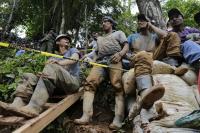
The 24–72 hours range contains the strongest Nicaragua-linked evidence in this dataset, though it is not conservation-specific. One article reports on intensified illegal mining enforcement in Costa Rica’s Crucitas area, stating that many arrested suspects were Nicaraguan citizens extracting gold illegally in Costa Rica and that some were deported back to Nicaragua—an environmental angle insofar as illegal mining is described as harming ecosystems of high ecological value. Another Nicaragua-focused item describes the “mechanisms” of dictatorship surveillance and persecution of the Catholic Church, including documented attacks and expulsions/exile of priests. While these are primarily political/human-rights stories, they provide background on enforcement pressure and institutional constraints that can shape environmental governance on the ground.
Finally, across the 3–7 days window, the feed includes a notable Nicaragua-related regional development: RS2’s long-term processing agreement expands its acquiring and issuing capabilities into multiple Latin American markets, explicitly including Nicaragua (along with Honduras, El Salvador, Costa Rica, Panama, the Dominican Republic, Guatemala, and others). This is not conservation coverage, but it signals ongoing regional infrastructure and financial connectivity changes that can indirectly influence how environmental programs are funded or administered. The rest of the week’s Nicaragua mentions are either historical/political (e.g., commemoration of an internationalist hero in Nicaragua) or unrelated to conservation, so the overall picture for “Nicaragua Conservation News” in this 7-day slice is that the evidence is dominated by non-conservation reporting, with only limited environmental linkage via illegal mining enforcement.
Note: AI summary from news headlines; neutral sources weighted more to help reduce bias in the result.